Men's Vintage Clothing Guide UK: What to Buy First and How to Style It
July 01, 2026 · Demand Vintage
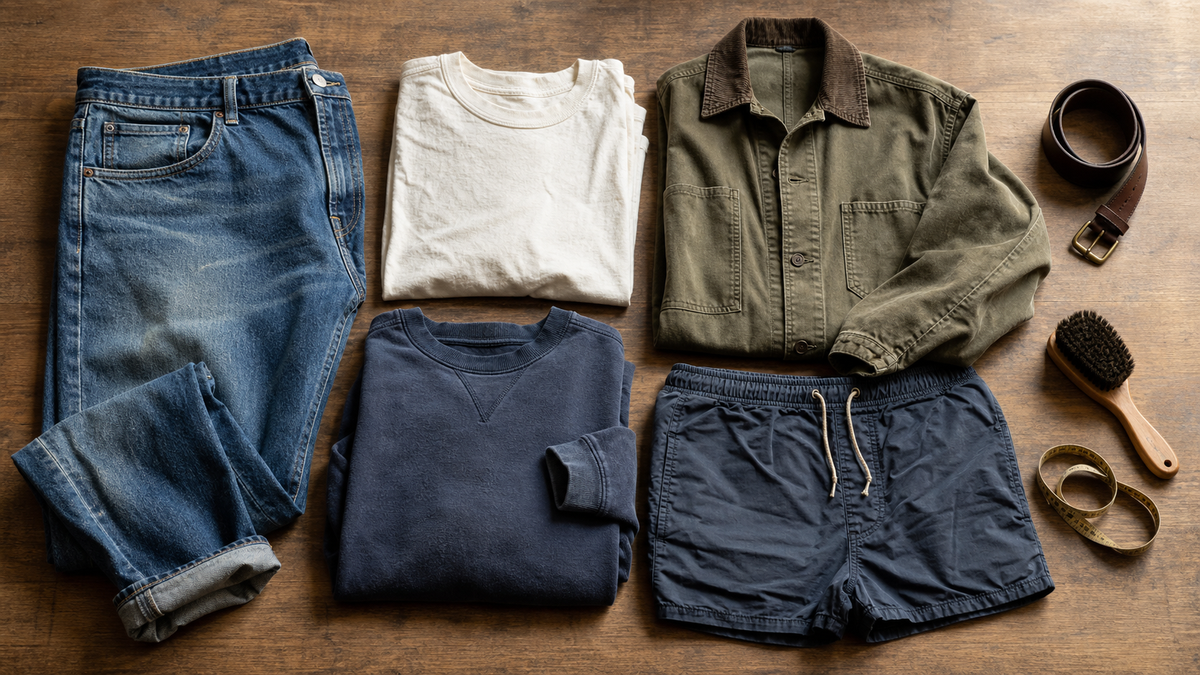
Buying men's vintage clothing works best when you start with pieces that earn regular wear: jeans that fit properly, a heavyweight T-shirt, a sweatshirt, a jacket, and one or two seasonal extras. Demand Vintage carries a broad Mens selection, so the easiest way to shop is to build from reliable categories rather than chasing every interesting piece at once.
This guide is written for UK vintage shoppers who want clothes they can actually wear, wash and style. It focuses on fit, condition, versatility and care, with links to live Demand Vintage collections and deeper Style Guide articles where they help.
Start with the pieces that do the most work
A strong vintage wardrobe does not need to be complicated. Choose categories that layer well, suit British weather and can move between casual days, uni, work, travel and weekends.
1. Vintage jeans or relaxed trousers
Good bottoms make the rest of the outfit easier. Straight-leg denim, relaxed jeans, cargos and chinos all sit naturally with vintage tops and jackets. Browse Mens Trousers & Jeans first if you need a foundation piece.
Do not rely only on the label size. Vintage trousers often fit differently from modern high-street sizing, and previous washing or alterations can change the waist and leg. Use the vintage jeans measuring guide when comparing waist, rise, inseam and leg opening against a pair you already like.
2. Heavy cotton T-shirts and polos
A plain or graphic-free vintage tee is one of the easiest entry points. Look for cotton with a good handle, a neckline that still sits cleanly, and a length that works tucked or untucked. The Mens T-shirts & Polos collection is a good place to start, especially if you are building outfits around denim, shorts or a work jacket.
For more detail on fabric, fit and condition checks, use the vintage T-shirts guide.
3. Sweatshirts, hoodies and fleeces
UK weather makes mid-layers useful most of the year. A vintage sweatshirt or hoodie can sit over a tee, under a jacket, or with shorts when the weather is warm but unpredictable. Check ribbing at cuffs and hem, the weight of the fabric, and any fading or marks before you buy. Browse Mens Hoodies & Sweatshirts, then read the vintage sweatshirts guide for fit and fabric checks.
4. One reliable jacket
A vintage jacket can change the whole shape of an outfit. Denim jackets, canvas work jackets, nylon sports jackets and fleece layers all suit different wardrobes. If you want one do-it-all piece, choose a jacket that leaves room for a sweatshirt underneath without swamping your shoulders. The Mens Coats & Jackets collection and Premium Vintage Jackets are the most direct places to browse.
The vintage jackets guide explains outerwear styles in more depth.
5. Seasonal shorts
Vintage shorts are useful for holidays, festivals, gym-to-street outfits and warm weekends. Denim, cargo and nylon pairs each wear differently, so check rise, thigh width and inseam rather than guessing from the waist alone. Browse Mens Shorts and use the vintage shorts guide when comparing styles.
Check fit before condition
Condition matters, but fit comes first. A clean, high-quality item is still a poor buy if the rise is wrong, the shoulders pull, or the length never works with your wardrobe.
Measure a few pieces you already wear often and keep those numbers handy. For tops, note pit-to-pit, shoulder width, sleeve length and body length. For trousers and jeans, note waist, rise, inseam and leg opening. Demand Vintage's vintage clothing size guide explains why measured fit is more reliable than tag size.
Read condition like a vintage shopper
Vintage clothing is pre-owned, so small signs of age can be normal. What matters is whether the condition suits the price, purpose and how you plan to wear it. Check common stress points: collars, cuffs, hems, pockets, crotch seams, zips, buttons and underarms.
If you prefer cleaner wardrobe staples, start with Excellent Condition. If you are comfortable with more visible wear and want everyday pieces, Good Condition can still be practical. The vintage clothing condition guide explains how to read those grades before buying.
Build outfits around simple formulas
The easiest men's vintage outfits are repeatable. Try a heavy tee with straight jeans and a canvas jacket, a sweatshirt with relaxed trousers and trainers, or a nylon jacket with shorts for a sportswear feel. If a piece works in at least three outfits you already wear, it is more likely to stay in rotation.
For changeable UK weather, combine a tee, mid-layer and outer layer so you can adjust through the day. The vintage layering guide covers practical combinations for mild, wet and cool days.
Shop new arrivals with a plan
The New Arrivals collection is useful when you know what gap you are filling. Search with a short list: one pair of trousers, one mid-layer, one jacket, or one summer piece. This stops impulse buys from becoming duplicates.
If you are just starting, prioritise neutral colours first: washed denim, navy, grey, cream, olive, black and tan. Once those are covered, add stronger colours, patterns or statement sportswear when they fit your existing wardrobe.
Care keeps good vintage wearable
Once you have found the right piece, treat it carefully. Wash only when needed, follow care labels where present, air dry knitwear and sweatshirts flat when appropriate, and avoid high heat on older prints, elastic or delicate fibres. Store jackets on sturdy hangers and fold heavy knitwear or sweatshirts if hanging would stretch them.
For a fuller routine, read how to care for vintage clothes.
Final buying checklist
- Can you wear it with at least three pieces you already own?
- Do the measurements match a garment that fits you well?
- Are any marks, repairs or signs of wear acceptable for how you will use it?
- Does the fabric suit the season and your washing routine?
- Would you still want it without the brand, trend or label?
Start with practical staples, then add character as your wardrobe settles. That is the simplest way to buy men's vintage clothing that looks good, fits properly and keeps earning its place.