How to Measure Vintage Jeans Before You Buy: A UK Guide to Waist, Rise and Fit
June 16, 2026 · Demand Vintage
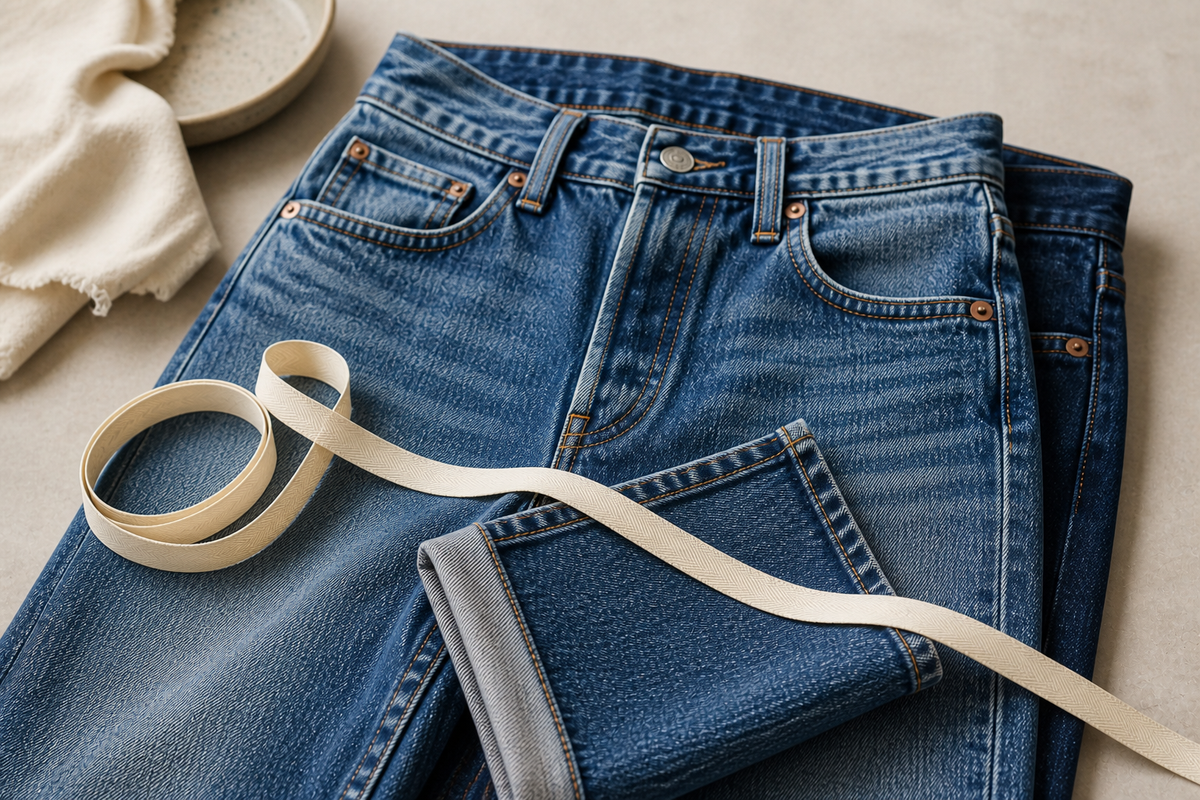
Buying vintage denim online gets much easier once you stop relying on the size printed on the label. A pair marked W32 can fit closer to a modern 30, while a vintage high rise can feel completely different from the jeans you wear every day. If you know how to measure vintage jeans properly, you can compare a listing against a pair you already own and cut down most of the guesswork.
This guide breaks down the key measurements UK shoppers should check before buying, how to compare flat lays, and where fit differences usually show up in older denim. If you want a broader overview first, read our Vintage Clothing Size Guide UK. If you are already shopping, browse our Men’s Trousers & Jeans, Women’s Trousers & Jeans, and Rare Vintage Levi's 501 Denims collections.
Start with a pair of jeans you already like
The easiest way to shop vintage denim online is to measure a pair that already fits you well. Do not compare the number on a modern size label to the number on a vintage one and assume they will match. Instead, use your own jeans as the reference point.
How to set them up properly
- Button the jeans and zip them up fully.
- Lay them flat on a firm surface without stretching the fabric.
- Smooth the waistband, seat and legs so the seams sit naturally.
- Use the same method each time so your comparisons stay consistent.
Most vintage sellers list flat measurements rather than body measurements. That is helpful once you know how to read them. For waist, you usually measure straight across the waistband and double it. For rise, thigh and leg opening, you compare the flat measurement directly.
The six measurements that matter most
Not every pair needs a full tailoring breakdown, but these six measurements will tell you most of what you need to know.
1. Waist
Measure straight across the top of the waistband from one side to the other, then double it. Vintage denim can shrink or stretch over time, so the tagged size may not reflect the true waist at all.
2. Front rise
Measure from the crotch seam up to the top of the front waistband. This changes how high the jeans sit on your body. A pair with a longer rise will usually feel more relaxed through the seat and often sits higher on the waist.
3. Hips or seat
Measure across the widest part of the hips, usually just below the bottom of the zip area. This matters if you want room through the seat rather than a tight, rigid fit.
4. Thigh
Measure across the upper thigh, roughly an inch or two below the crotch seam. This is one of the most useful measurements for vintage jeans because the waist can fit while the thigh still feels too narrow.
5. Inseam
Measure from the crotch seam down the inside leg to the hem. Check this carefully if you are tall, if you like a full break, or if you want to wear the jeans turned up.
6. Leg opening
Measure straight across the hem opening. This helps you work out whether a pair will sit straight, taper in, or stack differently over your trainers or boots.
Why vintage jeans can fit differently from modern denim
Vintage denim often feels different even when the waist looks right on paper. Older cuts were made for different silhouettes, fabric finishes and styling habits. That is one reason a general size guide only gets you so far.
- Higher rises are common, especially on older straight-leg pairs.
- Rigid denim gives less straight away than stretch-heavy modern jeans.
- Previous owners may have washed, dried or altered the jeans over time.
- Different brands and eras can vary through the seat, thigh and hem.
If you are browsing older straight-leg denim or collector-friendly pairs, our Rare Vintage Levi's 501 Denims collection is a good reminder that one model name still comes with fit variation depending on age, shrinkage and wear.
What to check on a vintage jean listing before you buy
Once you know your numbers, the next step is checking whether the listing gives you enough detail to buy confidently.
Look for clear flat measurements
A good listing should make the key measurements easy to compare. If one detail is missing, it is usually worth asking for it rather than guessing.
Check the condition as closely as the size
Denim can look great in one photo and still have wear in the areas that matter most. Pay attention to the seat, crotch, hems, belt loops and inner thigh. Our guide on how to spot quality vintage clothing is a useful companion if you are learning what strong vintage condition looks like.
Watch for alterations
Jeans are often shortened, tapered or taken in at the waist. A hemmed inseam is not automatically a problem, but you should know about it before you buy. Alterations can change the shape of the leg just as much as the length.
Quick fit advice for common vintage denim searches
For straight-leg vintage jeans
Prioritise waist, rise and leg opening. Those three numbers usually tell you whether the pair will feel classic and easy or sharper and more fitted.
For relaxed workwear denim
Check thigh and seat space carefully. Utility and workwear-inspired jeans can still vary a lot depending on brand, wash and era. If workwear is your thing, our Vintage Workwear Guide is worth reading alongside your measurements.
For everyday styling
Think about how you want the jeans to sit with the rest of your wardrobe. A higher rise and straighter hem can look great with layers, tucked tees and jackets. If you want outfit ideas after you find the right fit, see our guide to styling vintage denim.
Before you check out
Before buying, compare the listing against your best-fitting jeans one last time rather than against your body alone. That extra step usually gives a more realistic idea of how the vintage pair will wear in daily life.
If you are shopping current stock, start with New Arrivals and then narrow into Men’s Trousers & Jeans or Women’s Trousers & Jeans. And once your pair lands, our vintage clothing care guide will help you keep the denim in good shape for longer.
Measure first, compare carefully, and vintage jeans become much easier to buy well.