Vintage Layering Guide UK: How to Dress for Changeable Weather
June 27, 2026 · Demand Vintage
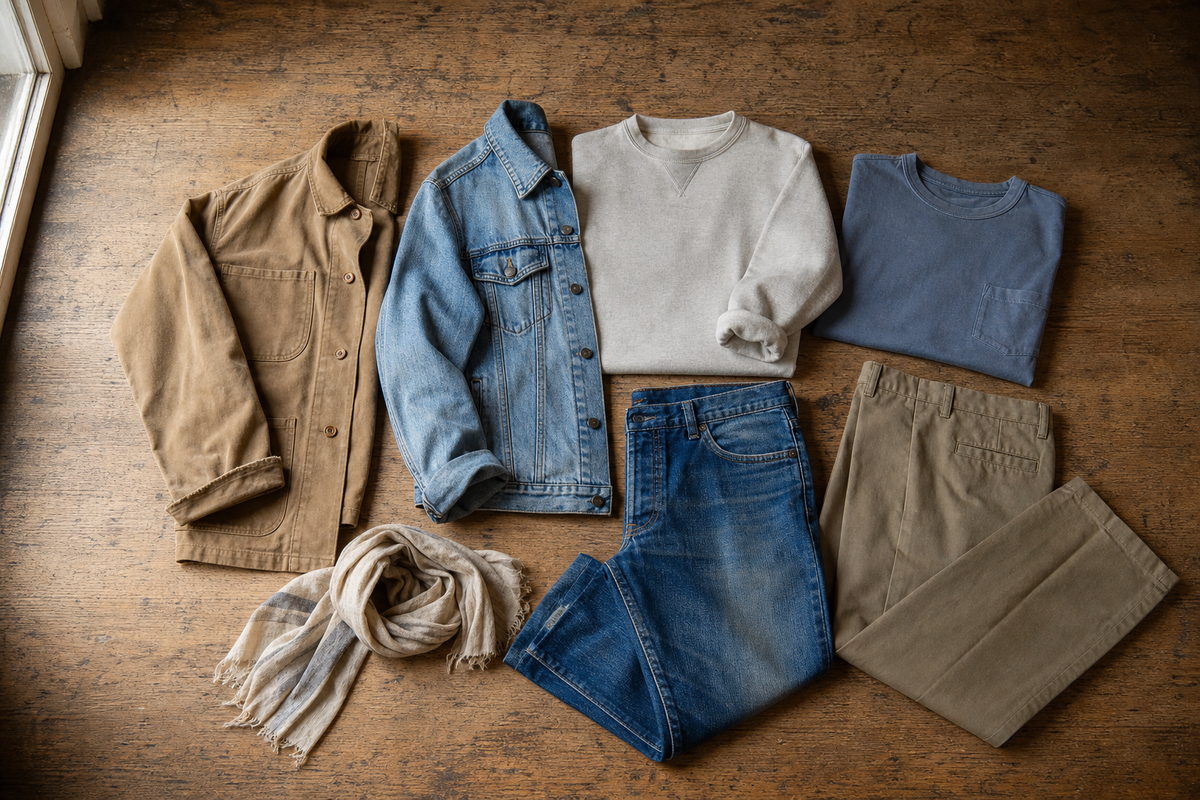
Layering is one of the easiest ways to make vintage clothing work in the UK. The weather can move from mild to wet to cold in a single day, so a good outfit needs more than one strong piece. It needs breathable basics, comfortable middle layers and outerwear that gives shape without making the whole fit feel bulky.
This vintage layering guide UK shoppers can use focuses on practical outfit building: what to buy first, how to check fit, and how to combine tees, sweats, jackets and trousers from the Demand Vintage rails.
Start with a base layer that actually fits
Your base layer sets the proportions for everything else. A vintage tee or polo should sit comfortably across the shoulders, leave room under the arms and finish at a length that works with your trousers. If it is too tight, every layer above it will pull; if it is much too long, it can bunch under sweatshirts and jackets.
For easy everyday layering, start with the Mens T-shirts & Polos or Womens T-shirts & Polos collections. Plain, washed cotton and simple striped pieces are especially useful because they sit under workwear, denim jackets and sweatshirts without competing with them.
Quick base-layer checks
- Check the pit-to-pit measurement against a tee you already like.
- Look for a collar that still holds its shape if you want it visible under a crewneck.
- Choose lighter cotton for warmer days and heavier jersey when the tee is doing more of the outfit work.
Add a mid-layer for warmth and texture
The mid-layer is where vintage outfits get depth. Hoodies, crewnecks and fleeces add warmth, colour and texture, while still being easy to remove indoors. This is useful for commuting, shopping, pub gardens and weekends where the temperature keeps shifting.
Browse Mens Hoodies & Sweatshirts and Womens Hoodies & Sweatshirts for pieces that can sit over a T-shirt and under a jacket. If you want more detail on fabrics, cuffs and fit, the Vintage Sweatshirts Guide UK covers what to look for before buying.
How a mid-layer should fit
A good mid-layer should have enough room for a tee underneath without ballooning under outerwear. Ribbed cuffs should still have some recovery, hems should sit cleanly rather than curling heavily, and the neckline should feel comfortable when layered. Oversized can look good, but it works best when the jacket above it has enough shoulder and sleeve room.
Choose outerwear by weather, not just style
The final layer should suit the day. A denim jacket gives structure in mild weather, a canvas work jacket adds durability, a nylon jacket is useful when you want something lighter, and a heavier coat earns its place when the temperature drops. The key is to choose outerwear that works with your base and mid-layer rather than replacing them.
Demand Vintage has several useful outerwear rails, including Mens Coats & Jackets, Womens Coats & Jackets and Premium Vintage Jackets. For a deeper buying breakdown, read the Vintage Jackets Guide UK.
Outerwear fit checks
- Try to leave enough chest room for a sweatshirt underneath.
- Check sleeve length with arms bent, not just standing still.
- Inspect zips, poppers, cuffs and linings, especially on older jackets.
- Look at shoulder shape from the back, as this affects how cleanly the jacket layers.
Balance the bottom half
Layering is not only about the top half. Trousers and jeans control the overall silhouette. Straight-leg denim works with most jackets, while relaxed cotton trousers can soften heavier outerwear. If your top half is oversized, a cleaner trouser shape can stop the outfit feeling messy. If your jacket is short and fitted, a wider trouser can add balance.
Start with Mens Trousers & Jeans or Womens Trousers & Jeans. If you are unsure about vintage fit, the Vintage Clothing Size Guide UK and the vintage jeans measuring guide are worth checking before you buy.
Build easy UK outfit formulas
Simple formulas make vintage layering easier. Once you know the shape that works for you, you can swap colours, fabrics and weights without rebuilding the outfit from scratch.
Mild day
Vintage T-shirt, straight-leg jeans and a light denim or canvas jacket. This works well when you need a jacket in the morning but may not want one later.
Cool everyday outfit
T-shirt, crewneck sweatshirt, cotton trousers and a workwear jacket. Keep the base layer lighter so the sweatshirt and jacket can do the warmth.
Wet or windy day
T-shirt, hoodie or fleece, relaxed jeans and a jacket with a tighter weave or nylon shell. Check that the hood or collar sits comfortably under the outer layer.
Evening layer-up
Plain tee, heavier sweatshirt, darker denim and a structured jacket. This keeps the outfit practical without feeling overdone.
Buy condition with layering in mind
Small signs of age can add character, but some issues matter more when garments are layered. Weak cuffs, stretched hems, broken zips and heavy underarm wear can become more noticeable when a piece is worn with other layers. For cleaner wardrobe staples, browse Excellent Condition. For everyday pieces with more visible vintage character, Good Condition can still be a smart choice.
The Vintage Clothing Condition Guide UK explains how to read condition notes properly before buying online.
Care for layered pieces so they last
Layered outfits often mean heavier wear on collars, cuffs, underarms and hems. Air pieces between wears, wash only when needed, and avoid overloading older zips and seams. Sweatshirts and tees usually need more frequent care than jackets, while outerwear often benefits from spot cleaning and careful storage.
For more detail, use the vintage clothing care guide. If a favourite layer needs small work, the repair, rework and rewear guide covers when a repair is worth doing.
Where to start
If you are building a vintage layering wardrobe from scratch, start with one good tee, one sweatshirt, one reliable jacket and one pair of jeans or trousers that you can wear repeatedly. Then add more texture, colour and weight as you learn what you reach for most.
For the freshest mix of tees, sweats, jackets and trousers, browse New Arrivals. Layering works best when each piece earns its place, and vintage clothing is ideal for building outfits that feel practical, individual and ready for real UK weather.