Vintage Jackets Guide UK: How to Buy Better Coats and Outerwear
June 23, 2026 · Demand Vintage
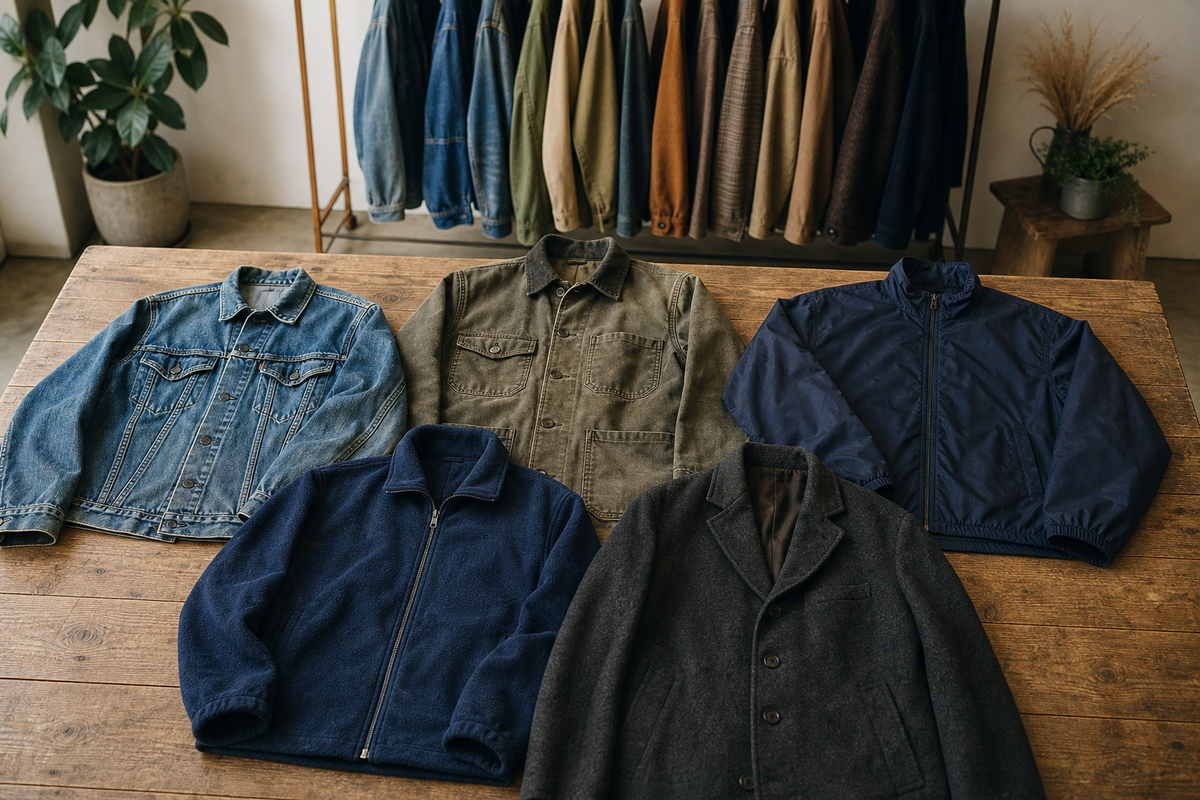
A good vintage jacket is one of the most useful pieces you can add to a wardrobe. It works over a T-shirt in spring, sits over a sweatshirt when the weather turns, and gives simple outfits more shape without feeling overdone. The challenge is choosing the right one online, especially when vintage sizing, condition and fabric weight can vary from piece to piece.
This vintage jackets guide UK shoppers can use focuses on practical checks: what jacket types are worth considering, how to judge fit, what condition details matter, and how to style outerwear with the pieces already in your rotation. If you want to browse current stock while reading, start with Mens Coats & Jackets, Womens Coats & Jackets, Premium Vintage Jackets and New Arrivals.
Start With How You Will Wear It
Before looking at labels or eras, think about the role the jacket needs to play. A cropped denim jacket, a canvas chore jacket and a wool coat can all be excellent buys, but they solve different outfit problems. The best choice is usually the one that matches your routine, not the one that looks most interesting in isolation.
Light Everyday Layers
Denim jackets, Harrington-style jackets, light bombers and unlined utility jackets are useful when you want an easy layer over a tee, polo or shirt. They should feel comfortable open and should not pull sharply across the chest when fastened. These styles work well with vintage T-shirts, sweatshirts, cargos, jeans and shorts, so they are often the easiest first outerwear buy.
Weather-Ready Casual Jackets
Nylon windbreakers, padded jackets and fleece layers suit British weather because they are easy to layer and carry. A windbreaker is useful when you want a light shell, while fleece gives warmth without the bulk of a heavy coat. Check cuffs, hem elastic, zips and lining carefully because those functional details affect how the jacket wears day to day.
Smarter Vintage Coats
Wool coats, macs and structured overcoats are stronger choices when you want a cleaner silhouette. Look for shoulder shape, lining condition and fabric surface. A slightly relaxed coat can look sharp over denim or trousers, but one that is too large through the shoulders can feel awkward rather than intentionally oversized.
How to Check Jacket Fit Online
Vintage outerwear often fits differently from modern high-street sizing, so use measurements before relying on the label. Demand Vintage product pages are built around practical measurements, and the Vintage Clothing Size Guide UK explains how to compare those numbers with clothing you already own.
Chest and Pit-to-Pit
The pit-to-pit measurement is the first number to check. Compare it with a jacket that fits you well when laid flat. For light jackets, a little room is enough. For coats, fleece and padded layers, allow extra space for a sweatshirt underneath, especially if you plan to wear it through autumn and winter.
Shoulders, Sleeves and Length
Shoulder width changes the whole look of a jacket. A denim or work jacket can sit slightly relaxed, but if the shoulder seam drops too far it may feel bulky. Sleeve length matters too: ribbed cuffs can tolerate more length, while wool coats and structured jackets look better when the sleeve finishes cleanly around the wrist. Body length is a style choice, but cropped jackets pair especially well with higher-rise jeans and trousers.
Fastened Versus Open
Some vintage jackets are best worn open, especially trucker jackets and light overshirts. Others need to fasten comfortably, particularly windbreakers and coats. If you want warmth, check that the jacket will close over your usual mid-layer without straining across the chest or stomach.
Condition Details That Matter Most
Vintage does not need to be perfect, but it should match how you plan to wear it. Natural fading, softened fabric and small signs of age can be part of the appeal. Functional damage is different. Before buying, look closely at zips, poppers, lining, cuffs, collars and pocket edges.
Hardware and Fastenings
Zips should sit straight, buttons should be present, and poppers should not look pulled away from the fabric. A missing button can be simple to replace, while a broken zip is usually a bigger repair. For nylon and fleece, check the collar and zip area because those spots get the most wear.
Lining, Cuffs and Collars
Lining tells you how much life a jacket has had. Small marks may be acceptable on vintage outerwear, but heavy tearing or loose lining can make a jacket uncomfortable. Ribbed cuffs and collars should still have enough structure to hold their shape. For a deeper condition breakdown, read the Vintage Clothing Condition Guide UK and compare listings in Excellent Condition and Good Condition.
Fabric Wear and Patina
Denim and canvas often age well because fading, creasing and softened seams can make the piece look better. Wool needs a different eye: check for thinning, bobbling, moth nibbles and worn edges. Nylon should be checked for surface snags and flaking coatings. These details do not always rule a jacket out, but they should be reflected in how you plan to wear and care for it.
Easy Ways to Style Vintage Jackets
The simplest way to style vintage outerwear is to let the jacket set the tone, then keep the rest of the outfit grounded. A denim jacket over a plain tee and relaxed trousers is easy. A canvas jacket over a sweatshirt and jeans feels practical. A wool coat over vintage denim adds structure without needing formal pieces.
With Denim and Trousers
Most jackets work with vintage jeans, but shape matters. A boxy jacket usually pairs well with straighter denim. A longer coat can balance wider trousers. Browse Mens Trousers & Jeans and Womens Trousers & Jeans if you want to build the outfit from the bottom up.
With Tees, Polos and Sweatshirts
For mild weather, wear light jackets over vintage tees and polos. In colder months, swap in a hoodie, crewneck or fleece. The Vintage T-Shirts Guide UK and Vintage Sweatshirts Guide UK explain how to check those layers before pairing them with outerwear.
For Workwear and Festival Outfits
Canvas jackets, chore-style layers and utility pieces sit naturally in vintage workwear outfits. If that is the look you like, the Vintage Workwear Guide gives more detail. For summer events and unpredictable weather, the Vintage Festival Outfit Guide UK is useful for building layers that can handle a full day outside.
How to Care for Vintage Jackets
Outerwear does not need washing as often as base layers. In many cases, airing, brushing, spot cleaning and careful storage are better than frequent machine washing. Always check the fabric first: denim, canvas, nylon, fleece and wool all need different care.
Use a garment brush on wool, avoid high heat on nylon and fleece, and let denim or canvas air properly before storing. If a jacket has a small fault, consider repair before replacing it. The Care for Vintage Clothes Guide and Repair, Rework, Rewear explain the basics.
Quick Buying Checklist
- Choose the jacket type based on how you will actually wear it.
- Compare pit-to-pit, shoulder, sleeve and length measurements with a jacket you own.
- Allow room for layers if buying coats, fleeces or padded jackets.
- Check zips, buttons, poppers, lining, cuffs, collar and pocket edges.
- Decide whether signs of age add character or affect daily wear.
- Use condition notes and photos rather than relying only on the size label.
- Plan outfits around your existing denim, trousers, tees and sweatshirts.
- Care for the jacket according to fabric, not just colour or style.
Final Word
A strong vintage jacket should earn its place quickly. It should fit over the layers you wear most, suit the weather you need it for, and have condition details you are comfortable living with. Start with fit and function, then choose the fabric and shape that works with your wardrobe.
When you are ready to browse, look through Mens Coats & Jackets, Womens Coats & Jackets, Premium Vintage Jackets and New Arrivals for current Demand Vintage outerwear.