Vintage Trousers Guide UK: How to Buy Cargos, Chinos and Relaxed Fits
June 29, 2026 · Demand Vintage
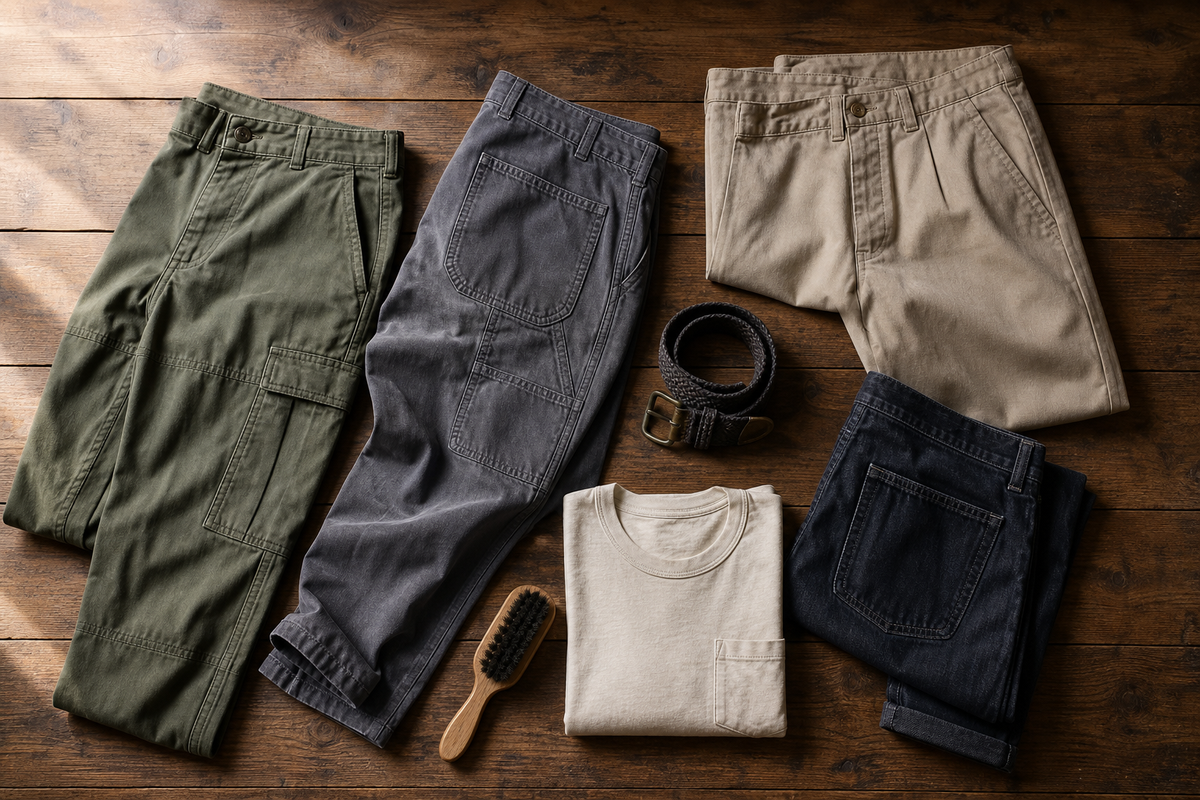
Vintage trousers can do a lot of work in a wardrobe. A good pair of cargos, chinos, work trousers or relaxed-fit denim gives you shape, texture and everyday wearability without leaning on one trend. The key is knowing what to check before you buy: measurements, rise, leg shape, fabric weight, pocket condition and how the pair will sit with the clothes you already wear.
This UK-focused guide is for shoppers comparing vintage trousers online, especially if you are browsing men's vintage trousers and jeans, women's vintage trousers and jeans, or the latest new arrivals. It keeps the focus practical: what to look for, how to size trousers properly, and how to style them with vintage layers you will actually wear.
Start with the trouser style, not just the waist size
Waist size matters, but it is only part of the fit. Vintage trousers vary a lot by era, cut and previous wear. Two pairs with the same waist can feel completely different if one has a high rise and straight leg, while the other has a lower rise and tapered ankle.
Cargo trousers
Cargos are useful when you want a relaxed shape with practical detail. Look at pocket placement, knee shape and hem width. Large side pockets add volume, so they usually work best with a simpler top: a plain tee, sweatshirt or clean jacket. If you like utility styling, cargos sit naturally alongside pieces from a vintage workwear wardrobe.
Chinos and casual trousers
Vintage chinos are a strong option when you want something smarter than denim but still easy to wear. Stone, khaki, navy and charcoal pairs are especially versatile because they work with trainers, boots, tees, overshirts and jackets. Check the front pleats, pocket edges and seat for wear, as these areas show how the trouser has been used.
Relaxed-fit denim and work trousers
If you like vintage denim but want a wider outfit base, relaxed-fit jeans and work trousers are worth considering. They give more room through the thigh and can balance oversized hoodies, heavy jackets and boxier vintage T-shirts. For dedicated denim sizing advice, use the vintage jeans measuring guide alongside this trouser checklist.
How to measure vintage trousers before buying
The safest way to buy vintage trousers online is to compare garment measurements with a pair you already like. Lay your best-fitting trousers flat and record the waist, rise, thigh, inside leg and hem opening. Then compare those numbers with the product listing rather than relying only on the labelled size.
Waist and rise
A higher rise can make the waist sit closer to your natural waist, while a lower rise may sit nearer the hips. This changes how the trouser feels even when the flat waist measurement is similar. If you are between sizes, the rise can be the difference between a pair that feels comfortable and one that pulls when you sit down.
Thigh, knee and hem opening
Vintage cargos and work trousers often have more room through the thigh than modern slim fits. That can be useful for comfort, but it also affects the silhouette. A wider hem will sit better over boots or chunky trainers, while a narrower hem gives a cleaner shape with low-profile footwear.
Inside leg
Do not assume every vintage pair can be worn the same way. Some trousers look best full length, some work cropped, and some can be cuffed. If you plan to turn them up, check whether the inner seam and hem are tidy enough to show.
For broader fit advice, the vintage clothing size guide explains why vintage labels can differ from modern UK sizing and why measurements are more reliable than tags.
Condition checks that matter on trousers
Trousers take a lot of wear, so condition checks should be specific. Light fading can add character, but stress damage around the seat, crotch, pocket corners and hems is more important than general colour variation.
Check the stress points
Look closely at the crotch seam, back pockets, belt loops and pocket openings. These areas handle tension, movement and daily use. Minor signs of wear are normal on second-hand clothing, but loose seams, thinning fabric or heavy fraying can affect longevity.
Decide what level of wear suits your wardrobe
If you want pairs that feel close to ready-to-wear, start with Excellent Condition vintage clothing. If you are happy with light wear and more character, Good Condition vintage clothing can be a strong value option. The vintage clothing condition guide explains how to read those grades before ordering.
How to style vintage trousers in the UK
The easiest outfits usually start with contrast. If the trouser is loose, keep the top cleaner or shorter. If the trouser is plain, use texture from a sweatshirt, fleece or jacket. If the trouser has heavy pocket detail, let that detail be the main point instead of competing with too many bold pieces.
Everyday casual
Pair relaxed trousers with a vintage tee from men's T-shirts and polos or women's T-shirts and polos. Add a sweatshirt when the weather changes. The aim is an outfit that feels balanced: easy upper half, strong trouser shape, comfortable footwear.
Utility and workwear
Olive cargos, dark work trousers and faded canvas pairs work well with overshirts, chore jackets, fleece and heavier outerwear. Browse men's coats and jackets, women's coats and jackets, or premium vintage jackets if you want the trouser to anchor a more structured outfit.
Layered weather-ready outfits
UK weather often calls for outfits that can change during the day. Trousers with a little room are useful because they work with T-shirts, hoodies, sweatshirts and jackets without looking too tight or too formal. For more outfit building, see the vintage layering guide.
Care tips for vintage trousers
Wash vintage trousers only when needed, follow the care label where it is still readable, and use a cooler wash for cotton and denim unless the garment clearly needs deeper cleaning. Turn trousers inside out before washing to protect colour and surface wear. Air drying is usually kinder than high heat because it reduces stress on seams, pocket edges and hems.
Small issues do not always mean a pair is finished. Loose hems, missing buttons and tired pocket bags can often be repaired, especially on sturdy cotton trousers. The repair and rework guide covers when to repair, rework or leave natural wear alone, while the vintage clothing care guide gives broader washing and storage advice.
Quick buying checklist
- Compare flat measurements with trousers you already wear.
- Check rise, thigh and hem opening, not just the waist.
- Look closely at the crotch seam, pocket corners, hems and belt loops.
- Choose cargos for utility detail, chinos for cleaner outfits and relaxed denim for everyday structure.
- Use condition grades to match your expectations before ordering.
- Plan at least two outfits before buying so the pair earns regular wear.
Final thoughts
The best vintage trousers are the pairs that fit your life, not just your size. Start with shape, check the measurements, read the condition details and think about how the trouser will work with your existing tees, sweatshirts and jackets. When those pieces line up, vintage cargos, chinos, work trousers and relaxed-fit denim can become some of the most useful items in your wardrobe.
Explore the current men's trousers and jeans, women's trousers and jeans, or browse new vintage arrivals to find the latest pairs available.