Vintage Skirts Guide UK: How to Buy, Size and Style Them
July 18, 2026 · Ali Hayder
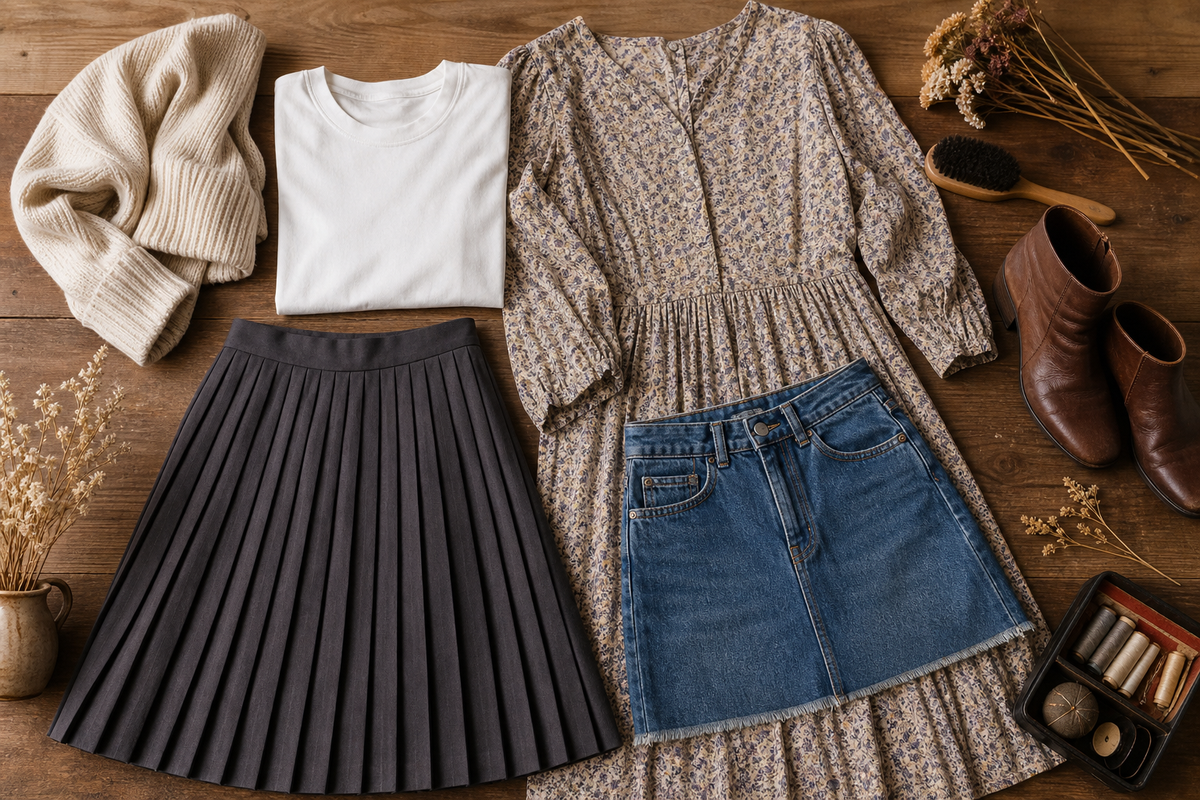
Vintage skirts are one of the easiest ways to add shape, texture and personality to a wardrobe. The strongest pieces are simple to fit, easy to layer and made from fabrics that still wear well after years of use.
What to look for in a vintage skirt
Start with the cut, then check the fabric and construction. A skirt that looks good on a hanger can still feel awkward if the waistband, lining or zip are weak.
Check the waistband and fastening
Look for clean stitching, a secure zip or button closure, and enough room to sit comfortably at your natural waist. If the waistband is stretched or the fastening pulls, the fit may be more work than the skirt is worth.
Choose the right fabric and drape
Cotton and denim usually feel more relaxed and everyday-ready, while wool, satin and viscose can add structure or movement. For a sharper eye on build quality, see our How to Spot Quality Vintage Clothing guide.
Check condition before you commit
Small repairs are normal on vintage, but weak seams, damaged linings and stubborn stains should be priced into the piece. If you want a clearer idea of condition terms, read Vintage Clothing Condition Guide UK.
How to size a vintage skirt
Vintage sizing is inconsistent, so the label matters less than the actual measurements. Compare the garment to a skirt you already wear and check waist, length and hip room before you buy.
- Measure your natural waist and compare it with the garment waistband.
- Check the length from waist to hem so you know where the skirt will sit on your body.
- Look at the rise and shape of the waistline if the skirt has darts, pleats or a fitted yoke.
For a fuller reference, use our Vintage Clothing Size Guide UK and, if you are pairing skirts with denim or jackets, our Vintage Layering Guide UK.
How to style vintage skirts in the UK
Vintage skirts work best when the rest of the outfit feels simple. A plain top, a useful layer and a comfortable shoe usually do more than trying to over-style the piece.
For everyday outfits
Try a denim skirt with a blank T-shirt and trainers, or pair a pleated skirt with a knit and loafers. This keeps the shape of the skirt visible while staying easy to wear.
For colder weather
Layer a wool or heavier skirt with tights, boots and a jacket. In winter, longer hems and thicker fabrics often feel more practical than short lightweight pieces.
For smarter looks
A floral or bias-cut skirt can work well with a tucked-in shirt or fitted knit. If you prefer a more outfit-led approach, the Womens collection is a useful place to start and then build around the skirt.
Where to browse at Demand Vintage
Start with the live Womens Skirts collection, then compare pieces in Womens Dresses, New Arrivals, Excellent Condition and Good Condition.
If you are shopping for a broader second-hand wardrobe, those collections are an easy way to compare skirt styles against dresses and everyday separates before you decide.
Care and storage
Use the care label and fabric content to decide whether a skirt can be machine washed or needs a gentler approach. For more detail, see Vintage Care Labels Guide UK and How to Care for Vintage Clothes.
When in doubt, air the piece after wearing, store it folded or on a supportive hanger, and repair small issues early so the skirt stays in rotation for longer.
Final thoughts
The best vintage skirts are the ones you can wear often: they fit well, feel comfortable and slot into the rest of your wardrobe without much effort. If you keep the focus on fabric, measurements and condition, you are far more likely to find a skirt that works beyond one season.