Vintage Knitwear Guide UK: How to Buy Better Jumpers and Sweaters
June 30, 2026 · Demand Vintage
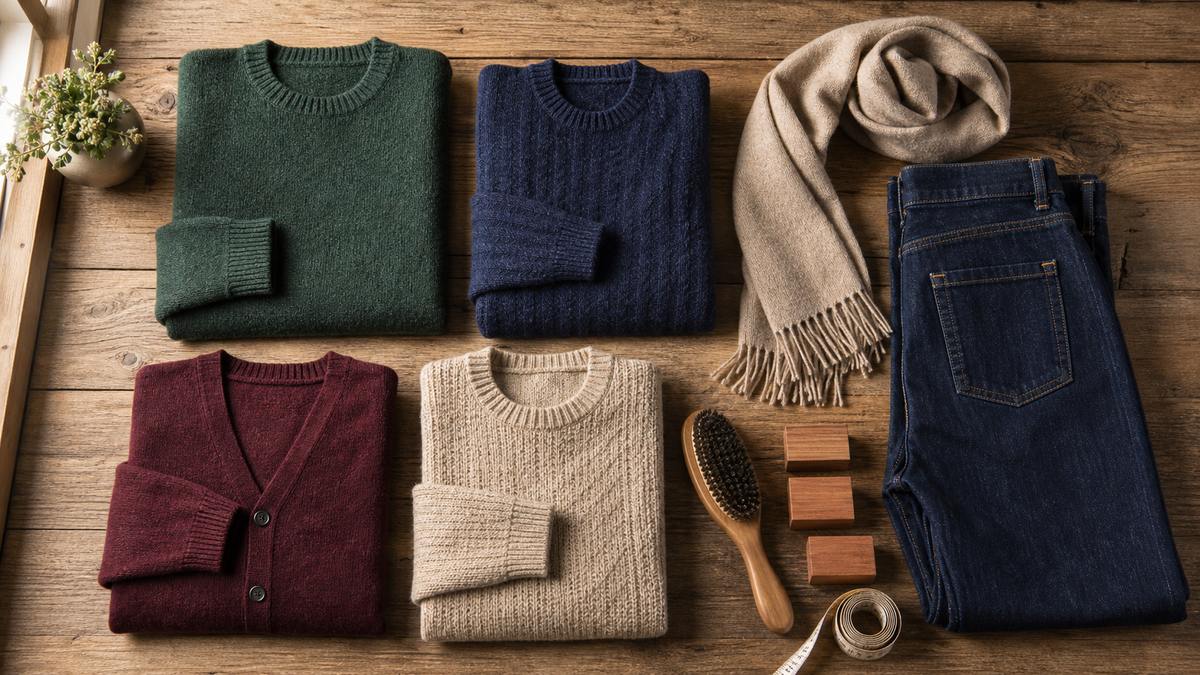
Good knitwear is one of the most useful categories in a vintage wardrobe. A well-chosen jumper, sweater or cardigan can sit under a jacket, soften a denim outfit, smarten up relaxed trousers and keep working across much of the UK year. The challenge is knowing what to check before you buy, especially when vintage sizing, fabric labels and condition can vary from piece to piece.
This vintage knitwear guide UK shoppers can use is designed for practical online buying. It focuses on fit, fibres, condition, styling and care, with links to relevant Demand Vintage collections and guides so you can build outfits around pieces that actually suit your wardrobe.
Start with the type of knitwear you need
Before comparing individual pieces, decide what role the knitwear should play. A heavy wool jumper is useful as a warm middle layer, while a lighter cotton knit can work more like a long-sleeve top. A cardigan gives you more temperature control, especially over a T-shirt or shirt, because you can wear it open indoors and button it up outside.
If you want something more elevated, start with the Premium Sweaters collection. For easier everyday layering, check New Arrivals as stock changes, then build around jeans, jackets and tees you already wear often.
Check fibres without overcomplicating it
Wool and wool blends
Wool can be warm, textured and long-lasting when it has been cared for properly. Look closely at photos for shrinkage, heavy bobbling, pulled threads and thinning at the elbows or cuffs. A small amount of surface pilling is normal on many older knits and can often be tidied carefully, but heavy matting or a stiff, shrunken shape is harder to fix.
Cotton knits
Cotton knitwear usually feels easier for milder weather and can work well for spring, cool summer evenings and indoor layering. It often has less bounce than wool, so pay attention to shoulder shape, hem stretch and whether the garment hangs evenly when laid flat.
Acrylic and mixed fibres
Plenty of vintage sweaters use acrylic or mixed fibres. These can still be wearable, affordable and easy to style, but inspect cuffs, neckline and underarms carefully. Shiny wear, snagging or heavy pilling can affect how polished the piece looks, even if the garment is still structurally sound.
Use measurements, not just the size label
Vintage knitwear labels can be inconsistent, and knit fabrics can change shape over time. Always compare flat measurements with a jumper or cardigan you already like. The most useful checks are pit-to-pit, length from shoulder to hem, sleeve length and shoulder width where the seam is visible.
If you prefer a neat fit, make sure the body length and shoulder width are close to your best-fitting knit. If you want an oversized fit, check that the sleeves and hem still land where you want them; too much extra length can make a jumper feel sloppy rather than relaxed. For a fuller measuring process, use the Vintage Clothing Size Guide UK, and apply the same compare-with-your-own-garment approach used in the vintage jeans measuring guide.
Inspect condition in the right places
Knitwear condition is about more than whether a piece looks clean in the first photo. Check high-wear areas: cuffs, neckline, elbows, hem, underarms and button bands. On cardigans, make sure the front edges sit evenly and the buttons look secure. On crewneck jumpers, inspect the collar for stretching or fraying.
Small signs of age can be part of vintage character, but holes, weak seams and heavy distortion should be weighed against the price and how much repair work you are happy to do. If you are comparing condition grades, the Vintage Clothing Condition Guide UK explains what excellent and good condition mean in practical buying terms. You can also browse Excellent Condition and Good Condition pieces directly.
Style vintage knitwear with pieces you already own
With denim
A textured jumper with straight-leg denim is one of the easiest vintage outfits to get right. Darker knits work well with faded blue jeans; oatmeal, cream and grey tones can soften indigo denim. Browse Mens Trousers & Jeans or Womens Trousers & Jeans if you want a simple base for knitwear outfits.
Under jackets
For UK weather, knitwear is often strongest as a middle layer. A medium-weight jumper under a canvas, denim or nylon jacket gives warmth without making the outfit feel too formal. If you are planning layered outfits, pair knitwear with Mens Coats & Jackets, Womens Coats & Jackets or the Premium Vintage Jackets edit. The Vintage Layering Guide UK has more detail on balancing base layers, mid-layers and outerwear.
Over tees and casual basics
A cardigan over a plain tee is easy to wear and easier to regulate through the day. If a knit feels bold in colour or texture, keep the base simple with pieces from Mens T-shirts & Polos or Womens T-shirts & Polos. For heavier casual outfits, the same principles apply to Mens Hoodies & Sweatshirts and Womens Hoodies & Sweatshirts, although sweatshirts and knitwear sit differently on the body.
Care for knitwear gently
Vintage knitwear benefits from slower care. Air it between wears when it is not dirty, wash only when needed, and follow the care label if it is still present. If the label is missing or unclear, avoid hot washes and aggressive spin cycles. Hand washing or a cool delicate cycle may be suitable for some pieces, but wool and delicate knits need extra caution.
Dry knitwear flat rather than hanging it wet, because hanging can stretch the shoulders and body. Store heavier jumpers folded, not on thin hangers. A clothes brush, careful de-pilling and prompt small repairs can keep a favourite knit in rotation for longer. For more detailed maintenance advice, read How to Care for Vintage Clothes and Repair, Rework, Rewear.
Quick checklist before you buy
- Choose the role first: warm layer, light knit, cardigan or smarter sweater.
- Compare flat measurements with knitwear you already wear.
- Inspect cuffs, neckline, elbows, underarms, hem and button bands.
- Decide whether minor pilling or small repairs are acceptable to you.
- Picture at least three outfits using jeans, trousers, tees or jackets you already own.
- Check care needs before buying delicate wool or textured knits.
Final thoughts
The best vintage knitwear is not just warm or interesting to look at. It fits your proportions, suits your existing outfits and has condition details you are comfortable with. Start with measurements, check the high-wear areas, and choose fibres and weights that match how you actually dress in the UK climate.
If you are building a versatile second-hand wardrobe, combine knitwear with durable denim, practical jackets and simple tees. The Vintage Capsule Wardrobe Guide is a useful next read once you know the type of jumper, sweater or cardigan you want to add.