Vintage Denim Care Guide UK: How to Wash, Store and Repair Jeans
July 11, 2026 · Demand Vintage
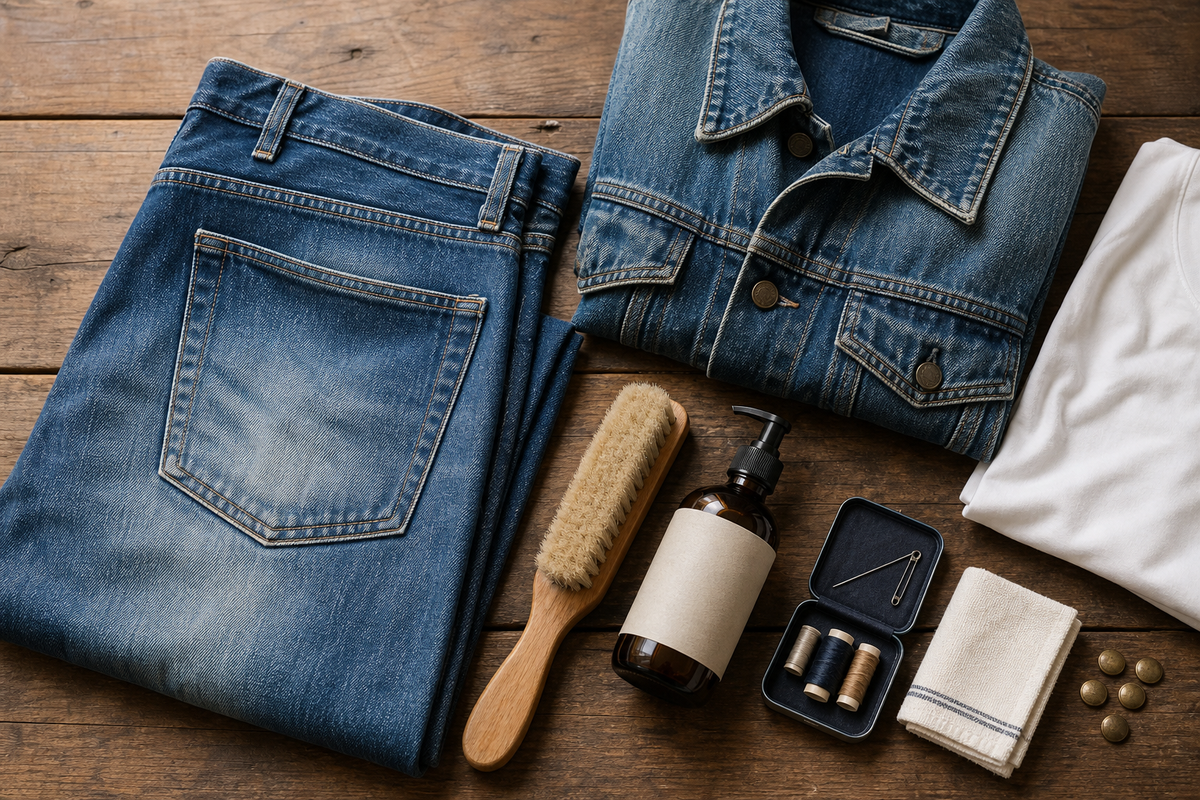
Vintage denim is built to be worn, but the way you wash, dry, store and repair it makes a real difference to how long it stays in rotation. Jeans and denim jackets can handle everyday use, but older cotton, worn seams, fading and previous repairs all deserve a slower care routine than new fast-fashion denim.
This guide focuses on practical vintage denim care in the UK: how to look after jeans, denim jackets and heavier cotton pieces without shrinking them, flattening the colour or making small flaws worse. Use it alongside the current Mens Trousers & Jeans, Womens Trousers & Jeans and Rare Vintage Levi's 501 Denims collections when choosing pieces you can care for confidently.
Start by checking the denim before you wash it
Do not put vintage denim straight into a hot wash without inspecting it first. Older jeans may have softened fabric, chain-stitch hems, replaced buttons, repaired seams or areas where the cotton has thinned through natural wear. A quick check helps you choose the gentlest useful care route.
Inspect high-stress areas
For jeans, check the crotch seam, inner thighs, back pockets, belt loops, fly, hems and waistband. For denim jackets, check the collar fold, cuffs, buttonholes, pocket corners and underarms. These areas take the most strain and are the first places where small issues can become bigger repairs.
Read the care label if it is still present
Many vintage pieces have faded, missing or partly unreadable labels. If the label is clear, follow it. If it is missing, take the cautious route: cool water, low agitation and natural drying. The Vintage Care Labels Guide UK explains how to read older fibre and washing tags before you decide what to do.
How often should you wash vintage denim?
Vintage denim usually does not need washing after every wear. If the garment is not stained or heavily soiled, airing and brushing can be enough. Washing less often helps reduce unnecessary friction, limits colour loss and keeps the fabric feeling better for longer.
That does not mean never washing denim. It means washing when it is actually needed: after heavy wear, visible dirt, odour that airing will not solve, or before storing for a longer period. If you have just bought a second-hand piece, check the condition notes first, then choose a gentle first clean if needed.
The safest way to wash vintage jeans
When a wash is needed, keep it simple. Turn jeans inside out, fasten buttons or zips, and use a cool wash with a mild detergent. Avoid overloading the machine because crowded loads create more abrasion. If the denim is fragile, hand washing or a very gentle cycle is safer than a standard cotton programme.
Use cool water and mild detergent
Heat can encourage shrinkage and can be rough on older fibres. Cool water is usually the better starting point for vintage denim, especially if you are unsure how the garment has been washed before. Use a small amount of detergent and avoid heavy fragrance, bleach or harsh stain products unless the fabric can clearly handle them.
Wash dark denim separately
Indigo can transfer, especially on darker or less-washed denim. Wash dark jeans separately from pale T-shirts, knitwear and light cotton. If you are styling denim with plain tops, browse Mens T-shirts & Polos or Womens T-shirts & Polos, but keep those lighter layers out of the same wash until you know the denim is colour-stable.
Dry denim without forcing it
Avoid tumble drying vintage denim unless the care label clearly allows it and you are comfortable with the risk. Heat can shrink cotton, stress seams and change the hand feel of the fabric. Air drying is slower, but it is usually the better route for older jeans and jackets.
Reshape the garment while damp. For jeans, smooth the waistband, legs and hems, then hang from the waistband or lay flat where air can move around the fabric. For jackets, use a broad hanger or lay flat so the shoulders do not distort. Keep drying denim away from strong direct heat such as radiators.
Care for fades, whiskers and worn-in character
Part of the appeal of vintage denim is the way it has aged. Fading, soft creases, repaired areas and worn edges can add character, but they still need care. Treat worn-in details as areas to protect, not signs that the garment is disposable.
Do not scrub fades aggressively
If there is a mark on a faded area, spot clean gently with a damp cloth first. Hard scrubbing can lighten one patch more than the rest of the garment. If a stain needs more attention, test a hidden area and work slowly rather than applying a strong product across the visible denim.
Watch older hems and pocket edges
Frayed hems and pocket edges can look good, but loose threads can catch in the wash. Trim only long loose threads that are likely to pull further, and avoid cutting into structural stitching. If the damage is spreading, repair it before the next wash.
Repair small denim issues early
Small denim repairs are usually easier and neater when handled early. A loose belt loop, tiny seam opening or thinning inner thigh can often be reinforced before it becomes a hole. The Repair, Rework, Rewear guide is useful if you are deciding whether to mend, rework or leave visible wear alone.
When a patch makes sense
Patches work well on inner thighs, knees, seat wear and jacket elbows when the surrounding fabric is still strong enough to hold stitching. Choose a denim or cotton patch that supports the weak area without making it stiff or uncomfortable. Visible repairs can look great, but comfort should still come first.
When to get help
If a repair affects the fly, waistband, crotch seam, jacket shoulder or heavy hardware, a tailor or denim repair specialist may be the better choice. Spending a little on a good repair can be more useful than replacing a pair of jeans that already fits well.
Store denim so it keeps its shape
Denim is easier to store than delicate knitwear, but it still benefits from a little care. Make sure jeans and jackets are clean and fully dry before putting them away. Damp storage can create odour and can make older cotton feel tired.
Fold jeans along their natural shape and avoid crushing heavy stacks for long periods. Denim jackets can be folded or hung on a strong hanger, depending on space. If you are storing seasonal pieces, keep them somewhere dry, cool and away from direct sunlight.
Fit-preserving tips before you buy
Care is easier when the garment fits properly from the start. Jeans that are too tight at the waist, crotch or thigh will put extra pressure on seams and fabric. Jackets that pull across the shoulders or chest can strain buttons and seams every time you move.
Before buying, compare flat measurements with a garment you already wear. The How to Measure Vintage Jeans guide covers waist, rise, thigh and inside leg checks, while the Vintage Levi's 501 Guide UK explains how to judge classic straight-leg denim in more detail.
Condition matters, but it does not need to mean perfect
Vintage denim does not have to be flawless to be worth buying. Some of the best pieces have soft fading, replaced buttons, neat repairs or light edge wear. What matters is whether the condition suits the way you plan to wear and care for it.
For cleaner pieces, browse Excellent Condition. If you are comfortable with more visible character, the Good Condition collection can still include very wearable pieces. The Vintage Clothing Condition Guide UK explains how to read those terms before buying.
Quick vintage denim care checklist
- Inspect seams, hems, pockets, belt loops and fly before washing.
- Wash inside out, cool and gently when a wash is actually needed.
- Keep dark denim away from pale clothing until you know it is colour-stable.
- Air dry instead of using high heat.
- Repair small issues before washing makes them worse.
- Store denim clean, dry and away from strong direct sunlight.
- Use measurements before buying so seams are not under constant strain.
Ready to put the care routine into practice? Start with New Arrivals, compare measurements carefully, and choose vintage denim you can wash gently, repair when needed and keep wearing for years.